This content contains affiliate links. If you purchase through these links, we may earn a commission at no additional cost to you. This helps support the maintenance of the website and our research efforts..
Buying a pressure cooker sounds simple — until you’re staring at dozens of options online with no idea where to start. Electric or stovetop? 6-quart or 8-quart? Instant Pot or a traditional model? The questions pile up fast, and most guides make it worse by burying the answers in technical jargon. In the Ultimate Pressure Cooker Buying Guide, we will go through this.
I’ve been cooking with pressure cookers for years, and I can tell you this — once you understand the basics, the decision becomes obvious. This guide covers everything you actually need to know: how they work, which size fits your household, what safety features to look for, and which type suits your cooking style. No fluff, no confusion — just clear answers that help you choose the right one.
What Is a Pressure Cooker?
A pressure cooker is a sealed pot that uses steam pressure to cook food much faster than traditional methods. When water boils inside the closed pot, steam builds up, increasing the pressure and raising the boiling point of water. This allows food to cook at higher temperatures, which speeds up cooking while keeping flavors and nutrients intact. From tender meats to perfectly cooked beans and rice, a pressure cooker makes meal prep faster and easier. Modern models are equipped with safety features like locking lids and pressure release valves, making them safe and reliable for everyday cooking. For modern pressure cookers, you don’t have to worry about timing because they can adjust the air inside the pot automatically. It is a major benefit of the digital pressure cooker compared to a traditional one. Moreover, it came with built-in safety features. For example, while I am using my Instant Pot, I feel free, and I can focus on another task.
Types of Pressure Cookers
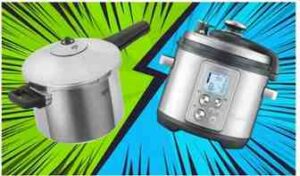
There are mainly two types of pressure cookers I have seen in my life. One is a stovetop, and another is an electric pressure cooker. Right now I am using an electric one. Compared to a stovetop pressure cooker, the electric one provides more convenience.
Let’s talk about an electric pressure cooker first. Electric pressure cookers quickly became my favorite for everyday cooking. I love that I can just set the timer, walk away, and come back to a perfectly cooked meal. They handle the pressure automatically, so there’s less stress and fewer mistakes. If you’re curious about which models I recommend, check out my full guide on Best Electric Pressure Canners or my roundup of Top-Rated Pressure Cookers. These guides helped me pick the safest and most reliable models.
On the other hand, stovetop pressure cookers are a bit more hands-on. I remember the first time I tried one—I had to watch the heat carefully and listen for the pressure whistle. But the results were worth it. Stovetop models cook faster and can reach higher pressures, which is perfect if you want total control and durability. For more details, see my guide on Stove Top Pressure Cookers.
If I gave you final suggestions, both types of pressure cookers have their own strengths. Electric pressure cookers are perfect for beginners or a busy family. More importantly, if you are a jobholder. On the other hand, stovetop cookers are ideal for those who love control and speed. You have to understand the difference between them.
Benefits of the electric pressure cookers |
- Speed and Efficiency
- Nutrient Retention and Flavor
- All-in-One Versatility
- Safety and Convenience
- Dishwasher Safe (not every model)
- Budget-Friendly Cooking
- Hands-Off Operation
Benefits of stovetop pressure cookers |
- Higher Pressure and Faster Cooking
- Superior Searing and Browning
- Durability and Longevity
- Storage and Space
- Wider Surface
- Better Heat Source
What Size Pressure Cooker Should You Buy?
As I bought my first pressure cooker, I did what most new users of pressure cookers do: I overemphasized the importance of the product’s brand name and characteristics while paying little attention to the size of the cooker. After cooking for a couple of weeks, I discovered one of the most important things about pressure cookers: size matters. If you buy one that is too small, you might not be able to cook meals of sufficient size; on the other hand, if you buy one that is too large, you might think it is unnecessary.
Usually, the size of pressure cookers is expressed by their capacity, which is measured in quarts. Nevertheless, you should never fill your pressure cooker completely, as most should be filled only about two-thirds of the way for safe operation, while for cooking certain foods, such as beans, rice, and grains, you should even fill it less than that.
That’s why choosing the correct size should depend mainly on how many people you cook for.
Let’s find out what size of the pressure cooker is best for you.
For 1–2 People |
If you cook mostly for yourself or for one other person, a 3–4 quart pressure cooker is usually enough. It is compact, easy to store, and perfect for small portions like soup, rice, vegetables, or beans. Smaller cookers also heat up faster, which makes them convenient for quick meals.
For a Family of 3–4 People |
A 6-quart pressure cooker is the most popular and versatile size. In fact, this is the size many home cooks start with. It provides enough space for everyday meals such as stews, chicken dishes, pasta, or large portions of rice. If you are unsure which size to buy, this is usually the safest choice.
If you want to see some reliable models in this category, you can explore my guide on
top-rated-pressure-cookers/
For a Family of 5–8 People |
For larger households, an 8-quart pressure cooker is a better option. The extra capacity allows you to cook bigger batches of food, large cuts of meat, or multiple servings at once. It is also useful if you enjoy meal prepping for the week.
My take
From my experience, a 6-quart pressure cooker is the best starting point for most kitchens. It offers the perfect balance between capacity and convenience, making it suitable for everyday cooking.
Important Safety Features to Look For
-
Lid Locking Mechanism

One of the most important safety features is the lid locking mechanism. This system prevents the lid from opening while the cooker is still under pressure. Once pressure builds inside the pot, the lid automatically locks in place and will only unlock after the pressure drops to a safe level. This protects you from hot steam and food suddenly escaping.
-
Pressure Release Valve
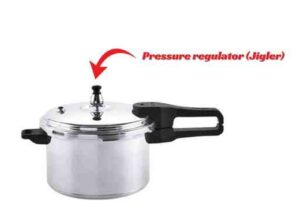
The pressure release valve regulates the internal pressure during cooking. When the pressure becomes too high, the valve automatically releases steam to keep the cooker within a safe limit. This prevents dangerous pressure buildup and keeps the cooking process stable.
-
Backup Safety Valve
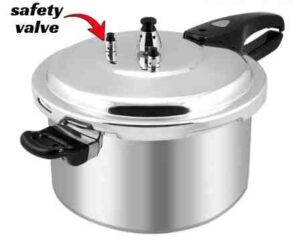 Good pressure cookers also include a secondary safety valve. Think of it as a backup system. If the main pressure valve becomes blocked by food particles or fails for any reason, the secondary valve releases pressure to prevent accidents. This extra layer of protection is one reason modern pressure cookers are considered very safe.
-
Sealing Gasket (Sealing Ring)
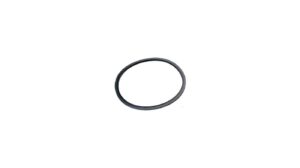 The sealing gasket, usually made of rubber or silicone, creates an airtight seal between the lid and the pot. This seal allows pressure to build properly while keeping steam from escaping. If the gasket becomes worn or damaged, the cooker may not maintain pressure safely, so it should be checked regularly.
-
Pressure Indicator or Float Valve
Many modern pressure cookers include a pressure indicator or float valve. This small pin rises when pressure builds inside the cooker and drops when the pressure is released. It provides a simple visual signal so you know when it is safe to open the lid.
Why These Safety Features Matter?
A high-quality pressure cooker usually combines several of these safety systems, creating multiple layers of protection. If one system fails, another one activates to release pressure safely. This redundancy is why modern pressure cookers are much safer than older designs.
When comparing models, always check that the cooker includes these essential safety features. If you want to see some reliable models with strong safety systems, you can explore my guide.
Pressure Cooker vs Pressure Canner |
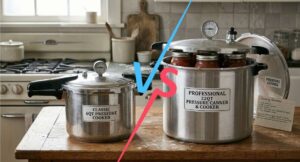
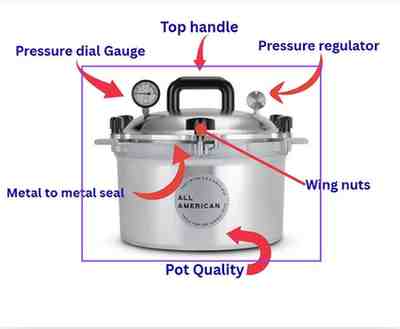
Some of you may be confused about the difference between a pressure cooker and a canner. Since they look very similar. Both have heavy lids, locking systems, and steam valves. Because of that, many beginners assume they can use them interchangeably. The thing is a pressure cooker is designed for fast cooking. It uses steam pressure to raise the boiling point of water, which helps food cook much faster than traditional methods. A pressure canner, on the other hand, is designed for food preservation. It allows you to safely store foods like vegetables, meats, and soups in sealed jars for long periods.
What Is a Pressure Cooker?
A pressure cooker is designed mainly for fast cooking. It traps steam inside a sealed pot, which increases pressure and raises the cooking temperature. As a result, food cooks much faster than traditional boiling or simmering.
Many everyday meals work perfectly in a pressure cooker. For example, you can cook rice, beans, soups, stews, or tender meat dishes in a fraction of the usual time. If you are new to pressure cooking and want to learn the basics, I highly recommend reading this step-by-step guide on how to use a pressure cooker
When it comes to choosing a good model, beginners often look for reliability and safety. In my experience, exploring some top-rated pressure cookers can help you compare features, sizes, and performance before making a decision.
What Is a Pressure Canner?
A pressure canner, on the other hand, is built for food preservation rather than everyday cooking. It allows you to safely store food in sealed jars for months or even years.
This is especially important for low-acid foods such as vegetables, meat, beans, and soups. These foods require higher temperatures to destroy harmful bacteria during the canning process. Pressure canners are specifically designed to reach and maintain those temperatures safely.
If you are interested in preserving your own food at home, you might want to explore some of the best models designed for this purpose. For example, this guide explains what to look for when choosing the best pressure cooker for canning.
Can You Use a Pressure Cooker for Canning?
This is where many beginners get confused.
Most standard pressure cookers are not recommended for pressure canning, especially for low-acid foods. They usually do not have the precise pressure control or capacity needed to safely process jars.
Pressure canners, on the other hand, are specifically built for that job. They are larger, stronger, and designed to maintain stable pressure for longer periods.
The Simple Way to Remember
If you ever feel confused, remember this simple rule:
-
Pressure cooker → best for cooking meals quickly
-
Pressure canner → best for preserving food safely
Final thoughts
A pressure cooker is one of those kitchen tools that quietly transforms the way you cook. Once you understand the basics — how they work, which size fits your household, and what safety features to look for — the decision becomes much easier than it first appears.
If you cook for one or two people, a compact 3–4 quart model is all you need. For most families, a 6-quart electric pressure cooker is the safest starting point — reliable, versatile, and beginner-friendly. If you cook in large batches or want total control, a stovetop model in the 8-quart range is worth considering.
Whatever you choose, the most important thing is this — don’t overthink it. Millions of home cooks use pressure cookers every single day without any issues. The technology is safe, the learning curve is short, and the results speak for themselves. Tender meals in a fraction of the time, with less effort and less cleanup.
Once you try it, you’ll wonder how you ever cooked without one.
Common Questions About Pressure Cookers
Is pressure cooking healthy?
Yes, pressure cooking is considered a healthy cooking method. In fact, many nutrition experts say it can preserve nutrients better than several traditional cooking techniques.
One reason is shorter cooking time. A pressure cooker cooks food much faster than boiling or slow simmering. Because the food is exposed to heat for less time, important nutrients—especially vitamin C and B vitamins—are less likely to break down.
Another benefit is that pressure cooking uses less water. When vegetables are boiled, many vitamins dissolve into the cooking water and are often thrown away. In a pressure cooker, only a small amount of liquid is used, which helps keep nutrients inside the food.
Pressure cooking also allows you to cook with less oil. Many dishes like beans, soups, stews, and meats can be cooked with minimal added fat. This can help reduce unnecessary calories while still producing flavorful meals.
Are pressure cookers safe to use?
Yes, modern pressure cookers are very safe. Older models had fewer safety mechanisms, but today’s pressure cookers include multiple safety features such as locking lids, pressure release valves, and pressure indicators. These features prevent the lid from opening while the cooker is under pressure. As long as you follow the instructions and avoid overfilling the pot, pressure cooking is completely safe for everyday use.
Does pressure cooking destroy nutrients?
No, pressure cooking usually preserves more nutrients than many traditional cooking methods. Because food cooks faster and uses less water, vitamins and minerals stay inside the food instead of being lost during long boiling or simmering. For many vegetables, pressure cooking can actually retain more nutrients than boiling.
Can beginners use a pressure cooker easily?
Yes, pressure cookers are beginner-friendly once you understand the basics. Most recipes follow a simple process: add ingredients, close the lid, build pressure, cook for a specific time, and release the pressure. After using it a few times, it becomes one of the easiest and fastest tools in the kitchen.
What foods should not be cooked in a pressure cooker?
Some foods do not work well in a pressure cooker. For example, delicate foods like dairy-based sauces can curdle under pressure, and foods that expand a lot—such as pasta or oatmeal—can create foam that may block the pressure valve if not cooked carefully. It’s best to follow tested recipes when starting out.
Can a pressure cooker replace other kitchen appliances?
In many cases, yes. A pressure cooker can replace several cooking tools because it can sauté, steam, boil, and slow cook in the same pot. Many people use it to cook rice, soups, beans, meats, and even desserts. This versatility is one reason pressure cookers are considered one of the most useful kitchen appliances.
What is the difference between a pressure cooker and a pressure canner?
A pressure cooker is designed for fast everyday cooking, while a pressure canner is used for preserving food safely for long-term storage. Pressure canners operate at higher and more controlled pressure levels needed to kill harmful bacteria during food preservation. If you want a deeper explanation, read our guide on Pressure Cooker vs Pressure Canner.
How long does a pressure cooker last?
A good quality pressure cooker can last many years with proper care. Stainless steel models are especially durable and can last a decade or more. The only parts that may need replacement over time are the sealing ring or gasket and occasionally the pressure valve.
About The Author